
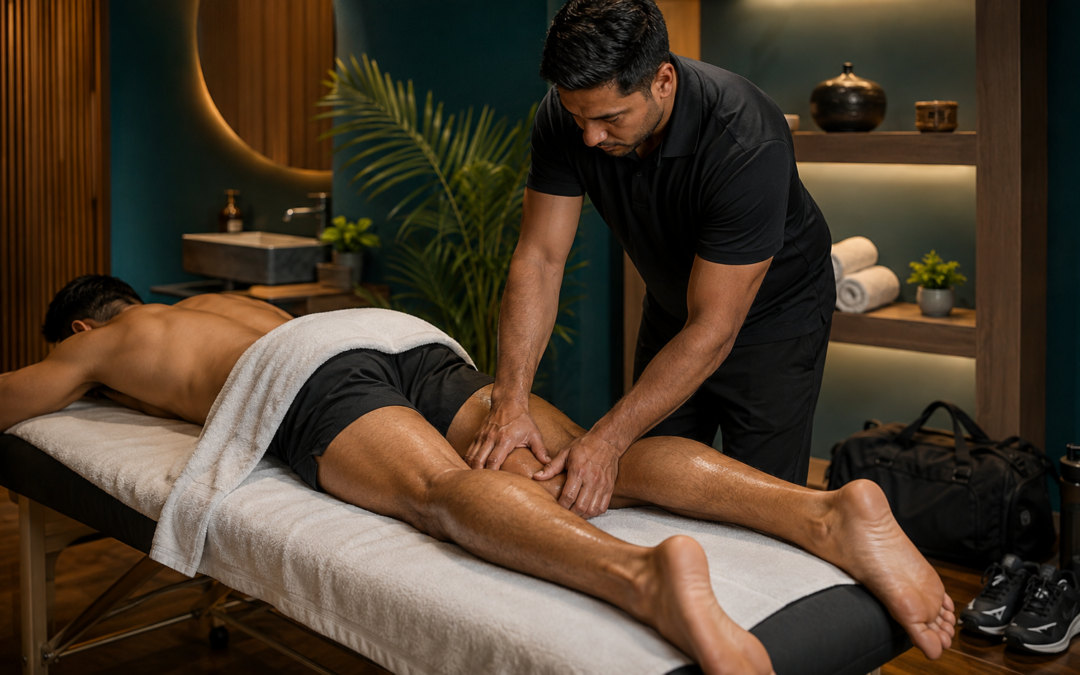
Training does not end when the run, ride, match or gym session finishes. The body still needs time to settle, rebuild and prepare for the next workload. Long commutes, desk hours and irregular sleep can make that recovery period more difficult, especially for active people balancing sport with a demanding Bengaluru schedule.
Sports Recovery Massage in HSR Layout is a wellness-focused option for athletes and recreational exercisers who want a structured session after training. It may help reduce the feeling of muscular tightness, support relaxation and make a recovery day feel more deliberate. It is not a substitute for sleep, nutrition, gradual training, physiotherapy or medical assessment when an injury is suspected.
At Seven Days Spa HSR Layout, the therapist begins with a short consultation about your sport, recent training, soreness pattern, pressure preference, previous injuries and areas to avoid. This guide explains how recovery needs differ for runners, cyclists, footballers, cricketers, gym members and marathon trainees, along with current branch pricing and booking details.
Quick answer: Sports massage usually uses targeted pressure around muscle groups affected by training. Research reviews suggest massage may provide a modest reduction in perceived post-exercise soreness and may improve flexibility, but it does not consistently improve strength, sprint, jump or endurance performance. Recovery still depends mainly on appropriate training load, sleep, food, hydration and time.
Check today’s availability: View the HSR Layout branch, WhatsApp now, or call +91 99729 24100.
What Is Sports Recovery Massage?
Sports recovery massage is a personalised bodywork session planned around the muscles and movement patterns used during exercise. It may include broad warming strokes, controlled kneading, compression and slower focused work. The therapist should adjust the pressure to the athlete’s comfort rather than assuming that stronger pressure produces better recovery.
Sports Recovery Massage in HSR Layout may be planned differently depending on whether you completed a long run, heavy leg day, cycling session, football match, cricket practice or a low-intensity recovery day. A runner may prioritise calves, hamstrings and hips, while a swimmer or strength trainee may need more attention around the shoulders, back or forearms.
Massage cannot diagnose a strain, tendon injury, stress fracture or joint problem. Sharp pain, instability, significant swelling, inability to bear weight, new numbness, a joint that looks out of position or pain after a clear injury should be assessed by a qualified healthcare professional.
What the Evidence Actually Suggests
Massage is widely used in sport, but its effects should be described accurately. A systematic review and meta-analysis of manual sports massage found no clear improvement in strength, sprint, jump or endurance performance. It did find small benefits for flexibility and delayed-onset muscle soreness. Another review reported that massage may reduce perceived DOMS after strenuous exercise, although the size and consistency of benefit vary between studies.
This means a sports massage may help an athlete feel looser, calmer or less sore, but it should not be presented as a shortcut that repairs damaged tissue, removes “lactic acid,” prevents every injury or guarantees faster race performance.
For treatment comparisons, read Deep Tissue vs Swedish Massage or the broader guide to Swedish, Aroma, Deep Tissue and Thai massage.
Recovery Support for Runners
Running repeatedly loads the calves, feet, hamstrings, quadriceps, hips and lower back. Hill sessions, speed work, longer distances and sudden increases in mileage may leave the legs feeling heavy or tight.
Sports Recovery Massage in HSR Layout for runners may focus on the calves, outer hips, hamstrings, quadriceps and lower back, depending on the training week. Tell the therapist whether the session follows an easy run, interval day, long run or race. Recovery pressure should remain controlled when the legs are already very sore.
A massage session does not replace proper footwear, gradual mileage progression, strength work, rest or assessment of persistent shin, knee, Achilles or foot pain.
Recovery Support for Cyclists
Cyclists often experience repetitive loading around the quadriceps, hip flexors, glutes, calves, lower back, neck and forearms. Long rides may also create stiffness from holding a fixed riding position.
Sports Recovery Massage in HSR Layout for cyclists can combine leg work with attention to the lower back, shoulders and forearms. Riders should mention recent distance, climbing, indoor trainer use and any area that feels different from normal training fatigue. Bike fit, saddle position and training volume still need separate attention when discomfort keeps returning.
Recovery Support for Football Players
Football combines sprinting, cutting, jumping, kicking and physical contact. These movements place changing demands on the calves, hamstrings, quadriceps, groin, hips and lower back.
Sports Recovery Massage in HSR Layout for football players may be suitable on a planned recovery day when there is general muscular fatigue but no suspected injury. Do not book firm massage directly over a fresh collision, swollen ankle, acute groin pain or a knee that feels unstable. A pop, immediate loss of function or difficulty bearing weight requires medical assessment.
Recovery Support for Cricket Players
Cricket creates different demands for bowlers, batters, wicketkeepers and fielders. Fast bowlers may feel repeated load through the calves, hamstrings, hips, lower back and bowling shoulder. Batters and fielders may notice forearm, shoulder, back and leg fatigue after long sessions.
Sports Recovery Massage in HSR Layout for cricketers should reflect the playing role and recent workload. A bowler may need attention around the legs, back and shoulder girdle, while a batter may prioritise forearms, shoulders and lower back. New shoulder weakness, sharp back pain, swelling or reduced range after a specific incident should be assessed before massage.
Recovery Support After Gym Training
Resistance training may leave different muscle groups sore depending on the session. Squats and lunges commonly affect the thighs and glutes; deadlifts may load the posterior chain and back; pressing sessions may affect the chest, shoulders and triceps.
Sports Recovery Massage in HSR Layout after gym training may help with general tightness and perceived soreness, particularly when pressure is adapted to the day’s training. Avoid turning the session into another intense stressor. Very sore muscles do not always need very firm pressure.
Training progression, adequate food, protein intake, hydration and sleep remain central to recovery. Massage should complement the programme rather than compensate for excessive training volume.
Marathon Training and Race Recovery
Marathon preparation combines long runs, weekly mileage, strength work and reduced recovery time. The final weeks before a race also require careful timing because an unfamiliar or overly firm massage may leave temporary tenderness.
Sports Recovery Massage in HSR Layout for marathon trainees should be planned around the training calendar. Before the race, choose familiar, comfortable techniques rather than experimenting with aggressive pressure. After the race, tell the therapist about blisters, cramps, joint pain, heat exposure and any area that feels unusually painful.
Severe pain, dark tea- or cola-coloured urine, unusual weakness or soreness far beyond what you expected after extreme exercise can be warning signs of rhabdomyolysis and require immediate medical attention.
Using Massage on Recovery Days
A recovery day is not necessarily complete inactivity. Depending on the training plan, it may include easy walking, gentle mobility, normal meals, hydration, quality sleep and reduced training load.
Sports Recovery Massage in HSR Layout on a recovery day may suit athletes who want a calm, structured session without adding more exercise. The therapist should know what you trained recently and what you plan to do next. Schedule enough time afterwards to avoid rushing directly into another demanding activity.
DOMS: Delayed-Onset Muscle Soreness
DOMS is the soreness that often appears after unfamiliar or demanding exercise, particularly when muscles perform lengthening actions under load. It usually becomes noticeable after the session rather than during it and may be accompanied by stiffness or tenderness.
Sports Recovery Massage in HSR Layout may reduce the perception of DOMS for some guests, but the effect is usually modest and temporary. Massage does not prove that the muscle has fully recovered or that it is safe to repeat the same training load immediately.
DOMS is normally diffuse and linked to the muscles trained. Sharp pain, major swelling, bruising, instability, inability to use a limb normally, numbness, joint pain or worsening symptoms may indicate an injury rather than normal post-exercise soreness.
Which Massage May Suit Your Recovery Goal?
The most suitable session depends on your soreness, training phase, pressure preference and whether there is a known injury. Explain your goal instead of choosing only by treatment name.
| Massage or package | May suit | Typical pressure | Current HSR page price |
|---|---|---|---|
| Signature Sports Massage | Targeted recovery after training and general muscular tightness | Medium to firm, adjusted gradually | ₹2,200 / ₹2,700 for 60 / 90 minutes |
| Deep Tissue Massage | Guests who prefer slower focused work around persistent tightness | Medium to firm | ₹2,000 for 60 minutes |
| Classical Swedish Massage | Easy recovery days, first-time visitors and full-body relaxation | Light to medium | ₹2,200 / ₹2,500 for 60 / 90 minutes |
| Thai Massage (Dry) | Compression and assisted movement for guests comfortable with a dynamic session | Medium and dynamic | ₹2,200 / ₹2,700 for 60 / 90 minutes |
| 7 Days Gentleman Retreat | Combined Swedish and deep-tissue session | Mixed and personalised | ₹2,800 for 90 minutes |
Prices are based on the currently published HSR Layout page and may change. The page also advertises offers of up to 20% on selected services. Confirm taxes, inclusions, appointment duration and current promotion while booking.
View pricing: Check the HSR Layout menu and packages.
What to Expect During Your Appointment
A professional recovery appointment should include a consultation, private preparation, appropriate draping, gradual techniques and regular comfort checks. You remain in control throughout the session.
- Training discussion: Explain your sport, last session, upcoming event and normal recovery routine.
- Injury screening: Mention pain, swelling, recent collisions, previous surgery and areas being treated by a physiotherapist.
- Pressure choice: Request light, medium or firmer pressure according to comfort.
- Priority areas: Identify the muscle groups that feel generally tired or tight.
- Gradual start: The therapist should warm the area before applying focused pressure.
- Comfort checks: Speak up when pressure feels sharp, electrical, radiating or excessive.
- Calm finish: Allow the session to end without immediately rushing back into training.
Sports massage should not be treated as a test of pain tolerance. “No pain, no gain” is not a safe rule for bodywork.
Seven Days Spa HSR Layout
The branch is on 24th Main Road in HSR 1st Sector, with access from Agara, Kudlu, Silk Board, Koramangala, Sarjapur Road and nearby South-East Bengaluru neighbourhoods.
Seven Days Spa – HSR Layout
1307, 1st Floor, GRS Plaza, 24th Main Road
Vanganahalli, HSR 1st Sector
Bengaluru, Karnataka 560102
Phone and WhatsApp: +91 99729 24100
Email: sevendaysspahsr@gmail.com
Opening hours: Monday–Sunday, 10 AM–9 PM
Get Directions · WhatsApp Now · Book an Appointment
Trust and Hygiene Signals
- Consultation before treatment and pressure customisation
- Therapists trained across multiple massage modalities
- Private treatment rooms and appropriate draping
- Fresh linens and cleaned treatment spaces
- Clear session duration and pricing before confirmation
- Questions about training, experience and credentials welcomed
- Genuine customer feedback used only with clear attribution
The official branch page describes trained professionals, a comprehensive spa menu, a relaxing environment and customised packages. Verify the live Google rating and review count immediately before publishing any rating claim.
When Massage Is Not the Right Recovery Choice
Massage is a complementary wellness service, not injury diagnosis or rehabilitation. Avoid massage over a suspected fracture, acute sprain, fresh muscle tear, open wound, active skin infection, severe bruising or a newly swollen joint.
Seek medical assessment when pain is severe or worsening, you cannot bear weight, a joint looks out of position, there is significant swelling, numbness, tingling, unexpected weakness, chest pain, shortness of breath, or a hot, red and tender calf. After extreme exercise, dark urine with severe muscle pain or unusual weakness requires immediate medical attention.
People who are pregnant, take blood-thinning medication, have a history of blood clots, recently had surgery or have a significant health condition should ask their healthcare provider whether massage is appropriate and tell the therapist before treatment.
Frequently Asked Questions
1. What is sports recovery massage?
It is a personalised massage session planned around the muscle groups used during training. The goal is usually relaxation, temporary relief from muscular tightness and a structured recovery experience.
2. Is sports massage the same as physiotherapy?
No. Physiotherapy assesses and rehabilitates injuries and movement problems. A spa massage is a wellness service and should not replace a physiotherapist, sports doctor or other qualified healthcare professional.
3. Does massage remove lactic acid?
No. Post-exercise soreness is not caused by lactic acid remaining in the muscles for several days. Massage may change how sore or tight you feel, but it should not be marketed as “flushing out lactic acid.”
4. Can sports massage cure an injury?
No. Massage cannot diagnose or cure a ligament tear, tendon injury, fracture, joint problem or muscle tear. Suspected injuries require professional assessment.
5. When should I book after a workout?
Timing depends on the workout and how you feel. A calm session may be suitable later the same day or on a recovery day when there is general tightness rather than acute injury. Tell the therapist what you trained and when.
6. Can I book massage before a match or race?
Yes, but use familiar, comfortable techniques and avoid unusually firm work close to an important event. An aggressive first-time session may leave temporary tenderness.
7. Should I choose 60 or 90 minutes?
A 60-minute session may suit one or two priority areas. A 90-minute session provides more time for several muscle groups or a slower full-body recovery treatment.
8. Is sports massage suitable for runners?
It may suit runners who have general tightness around the calves, hamstrings, thighs, hips or back. Persistent joint pain, shin pain, Achilles pain or foot pain should be assessed separately.
9. Is it suitable for cyclists?
Yes, when the goal is general relaxation or muscular recovery. Cyclists may request attention around the quadriceps, hips, calves, lower back, shoulders and forearms.
10. Can football and cricket players book?
Yes, when there is no suspected acute injury. Explain your playing position, recent match load and any area affected by collision, bowling, batting, sprinting or fielding.
11. Is massage useful after gym training?
It may modestly reduce perceived soreness and help the body feel more relaxed. It does not replace proper programming, sleep, nutrition, hydration or rest.
12. Can I book after a marathon?
Yes, when you feel stable and there are no injury warning signs. Mention blisters, cramps, heat exposure, joint pain and unusual weakness before the session.
13. Does massage help DOMS?
Research suggests massage may modestly reduce perceived DOMS for some people. It does not guarantee full muscle recovery or mean you should immediately repeat the same training load.
14. Is a recovery-day massage better than complete rest?
There is no single best recovery method for everyone. Massage can be one part of a recovery day alongside sleep, food, hydration and light activity appropriate to your training plan.
15. How can I tell soreness from injury?
Normal soreness is usually linked to the muscles trained and may feel diffuse. Sharp pain, major swelling, bruising, instability, joint pain, numbness or inability to use the area normally may indicate injury.
16. What should I tell the therapist?
Share your sport, recent workload, pressure preference, previous injuries, medication, surgery, health conditions and any area you want avoided. Mention when you are working with a physiotherapist or doctor.
17. How do I book at Seven Days Spa HSR Layout?
Call or WhatsApp +91 99729 24100, visit the HSR Layout branch page, or use the contact form.
Book Sports Recovery Massage in HSR Layout
Sports Recovery Massage in HSR Layout can provide a structured pause between demanding training sessions. The most useful appointment is one that reflects your sport, respects your current soreness and uses manageable pressure. Recovery improves when massage is combined with sensible training load, adequate sleep, balanced nutrition and timely professional care for injuries.
Book Now: Seven Days Spa HSR Layout
WhatsApp Now: +91 99729 24100
Check Today’s Availability: Contact the branch
View Pricing: Massage menu and packages
Get Directions: Open the Google Business location