
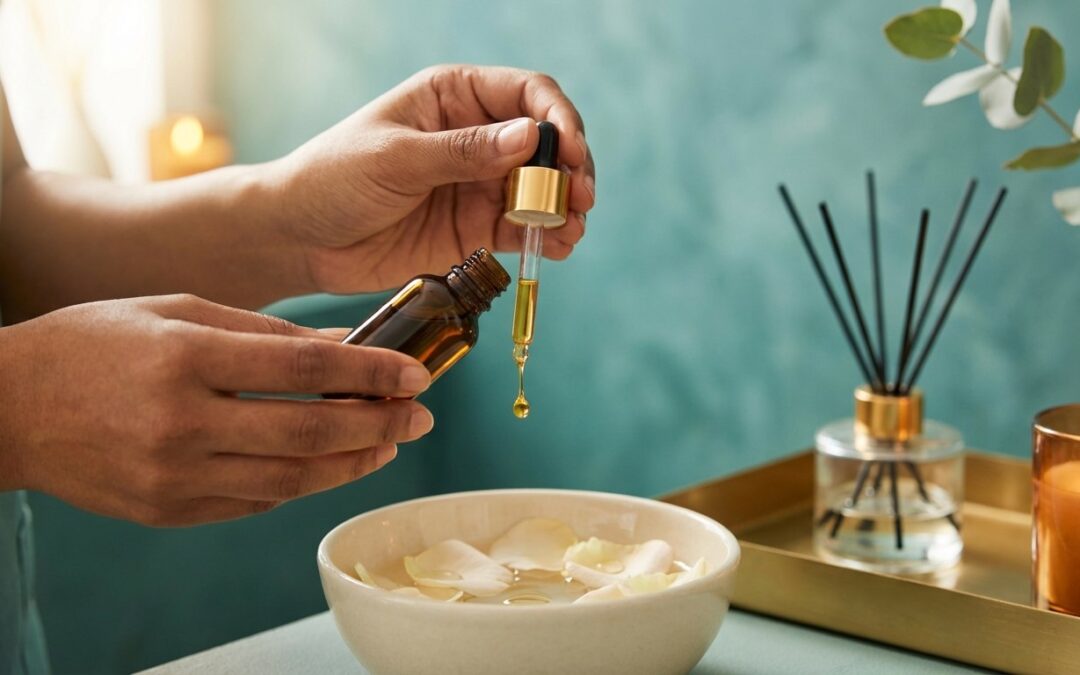
Your nose has a direct line to your brain. Aromatherapy massage uses this — on purpose.
If you live near 24th Main Road or commute through the HSR tech corridor, you know the feeling. Your eyes hurt from screen glare. Your shoulders carry the weight of back-to-back calls. You lie in bed at 11 PM scrolling, knowing you should sleep but unable to switch off. You have heard aromatherapy might help, but you are not entirely sure why smelling lavender would change anything physiological. This guide explains exactly that. You will learn how aromatherapy massage HSR Layout works at a hormonal level, which essential oils do what, and what happens during a session at Seven Days Spa. By the end, you will understand why scent is not just pleasant — it is a treatment pathway your body responds to faster than touch alone.
Your Nose Has a Direct Line to Your Brain — And Aromatherapy Massage Uses This on Purpose
Here is what makes aromatherapy different from every other massage modality. When you inhale an essential oil, the scent molecules travel through your nasal cavity and bind to olfactory receptors. These receptors send signals directly to your limbic system — the part of your brain that controls emotion, memory, and hormonal response. This pathway bypasses your conscious thought. You do not have to believe it works. Your amygdala and hippocampus respond before you even register the scent consciously.
This is why aromatherapy for sleep works faster than you expect. The olfactory-brain connection is immediate. Within two to three breaths, your nervous system begins shifting. Your parasympathetic nervous system — the rest-and-digest mode — starts to activate. Your cortisol levels begin to drop. This is not placebo. This is olfactory nervous system architecture.
Touch amplifies this. When essential oils are massaged into your skin, they absorb through your epidermis and enter your bloodstream. The combination — inhalation plus skin absorption — creates a dual-pathway effect. You are treating your nervous system from two directions at once. That is why aromatherapy massage feels different from a standard Swedish massage, even if the pressure and technique are similar.
If you are in HSR Layout dealing with hormonal fluctuations, disrupted sleep cycles, or chronic low-grade anxiety from work stress, this dual-pathway system matters. You are not just getting a relaxing treatment. You are intervening at a neurochemical level. The essential oils used in aromatherapy massage stimulate your brain to produce serotonin, reduce cortisol, and trigger melatonin production when your circadian rhythm needs recalibration. This is not wellness theater. This is applied neuroscience you can feel.
What Aromatherapy Massage Actually Is — Not Just ‘Nice-Smelling Oil’
Let’s clear up what aromatherapy massage is at a technical level. It is not a standard massage with scented lotion. It is a therapeutic modality that combines manual lymphatic drainage, Swedish massage techniques, and the topical and aromatic application of essential oils diluted in carrier oils.
Carrier oils matter. Seven Days Spa uses cold-pressed oils like sweet almond, jojoba, or grapeseed oil as the base. These are not just vehicles for scent. They have their own therapeutic properties. Sweet almond oil is rich in vitamin E and penetrates the skin slowly, which extends the absorption window for the essential oils. Jojoba mimics your skin’s natural sebum, so it absorbs evenly without clogging pores. These carrier oils create the slip needed for massage while ensuring essential oils reach your bloodstream through your skin.
Essential oils are the active agents. These are concentrated plant extracts — roots, leaves, flowers, bark — distilled to capture volatile aromatic compounds. One drop of essential oil can contain hundreds of biochemical constituents. Lavender oil, for example, contains linalool and linalyl acetate, both of which have been clinically shown to reduce anxiety and improve sleep quality. These are not metaphors. These are measurable compounds that interact with GABA receptors in your brain.
The massage technique itself is intentional. Aromatherapy massage typically uses long, flowing strokes that follow your lymphatic pathways. This encourages circulation and helps your body clear metabolic waste. The pressure is moderate — firm enough to reach muscle tissue but gentle enough to keep you in parasympathetic mode. If the pressure is too deep, your body shifts into sympathetic (fight-or-flight) response, which defeats the purpose. The goal is sustained relaxation, not tissue breakdown.
When you book an aromatherapy massage in HSR Layout, you are not getting a generic spa treatment. You are getting a clinically informed session designed to reduce cortisol, improve lymphatic flow, and recalibrate your autonomic nervous system using both touch and biochemistry.
The Olfactory-Brain Connection — Why Scent Works Faster Than Touch Alone
Your olfactory system is neurologically unique. It is the only sensory system with a direct line to your limbic brain. When you see something, the signal travels through your thalamus before reaching your visual cortex. When you hear something, it is processed through your auditory cortex. But when you smell something, the signal goes straight to your amygdala and hippocampus — no intermediary. This is why a scent can trigger a memory or shift your mood in two seconds flat.
This direct connection is why aromatherapy works faster than touch-only massage. Touch activates your peripheral nervous system and sends signals to your brain through your spinal cord. That pathway takes longer. Scent bypasses the queue. Within 30 seconds of inhaling lavender or bergamot, your brain chemistry begins to shift. Your heart rate slows. Your blood pressure drops. Your cortisol production decreases.
Research backs this. A 2017 study published in Frontiers in Behavioral Neuroscience showed that inhaling linalool (the primary compound in lavender) reduced anxiety behaviors in mice by modulating GABA-A receptors. A 2012 study in Evidence-Based Complementary and Alternative Medicine found that inhaling bergamot essential oil reduced cortisol levels and improved mood in human participants within 15 minutes. The speed of this response is what makes aromatherapy a serious intervention for stress and sleep disruption.
Your limbic system controls more than emotion. It regulates your hypothalamus, which controls your pituitary gland, which controls your entire endocrine system. This is the HPA axis — hypothalamic-pituitary-adrenal axis. When you are chronically stressed, your HPA axis is overactive. You produce too much cortisol, which disrupts your sleep, suppresses your immune function, and throws your other hormones out of balance. Aromatherapy intervenes at the top of this cascade. By calming your limbic system, you reset the entire axis.
If you are in HSR Layout dealing with late-night screen time and difficulty unwinding, this speed matters. You do not have time for treatments that take weeks to work. Aromatherapy massage gives you immediate nervous system feedback. You walk into Seven Days Spa at 7 PM after a long day near Agara Lake, and within 10 minutes of breathing eucalyptus and feeling frankincense absorb through your skin, your body starts producing the neurochemicals you need to sleep.
The 6 Essential Oils Seven Days Spa Uses — And What They Actually Do
Seven Days Spa uses six core essential oils in aromatherapy sessions. Each one has a distinct biochemical profile and therapeutic application. Your therapist will blend these based on what you are dealing with — sleep disruption, anxiety, hormonal imbalance, or physical tension.
Lavender (Lavandula angustifolia): This is the gold standard for sleep and anxiety. Lavender contains linalool and linalyl acetate, both of which act as mild sedatives. Clinical studies show lavender reduces cortisol, increases parasympathetic nervous system activity, and improves slow-wave sleep. If you are struggling to fall asleep or stay asleep, lavender is the foundation oil. It is gentle enough for daily use and effective enough to measure in sleep lab studies.
Bergamot (Citrus bergamia): Bergamot is a mood elevator. It contains limonene, which has been shown to reduce depressive symptoms and lower cortisol. A 2015 study in Phytotherapy Research found that inhaling bergamot reduced anxiety and improved mood in waiting room patients within 15 minutes. Bergamot also has a regulating effect — it calms you if you are anxious, but it does not sedate you if you need to stay alert. This makes it ideal for late-afternoon sessions when you want to unwind without crashing.
Ylang Ylang (Cananga odorata): Ylang ylang works on your cardiovascular system. It lowers blood pressure and heart rate, which signals your body to shift out of fight-or-flight mode. It also has mild euphoric properties — it lifts mood without stimulation. If you are dealing with stress that manifests as chest tightness or shallow breathing, ylang ylang helps your body remember how to take a full breath.
Eucalyptus (Eucalyptus globulus): Eucalyptus is for respiratory clarity and mental focus. It contains 1,8-cineole, a compound that opens airways and has anti-inflammatory effects. If you are congested from Bengaluru’s air quality or feeling mentally foggy, eucalyptus clears both. It is also cooling, which balances the warmth of oils like ylang ylang. Eucalyptus is often used in upper body and shoulder work where tension creates shallow breathing patterns.
Frankincense (Boswellia carterii): Frankincense is the nervous system stabilizer. It contains alpha-pinene and incensole acetate, which have been shown to reduce anxiety and improve emotional regulation. Frankincense also has grounding properties — it is used in meditation practices because it slows racing thoughts without sedation. If you are dealing with hormonal mood swings or perimenopausal symptoms, frankincense helps smooth the emotional volatility.
Rose Geranium (Pelargonium graveolens): Rose geranium is the hormone balancer. It has a regulating effect on your endocrine system, particularly for estrogen-related imbalances. It is commonly used for PMS, menstrual irregularity, and perimenopausal symptoms. Rose geranium also has mild diuretic properties, which helps if you retain water or feel bloated. Its scent is floral but not overpowering — it is grounding without being heavy.
Your therapist at Seven Days Spa HSR Layout will blend these oils based on your intake conversation. If you mention sleep issues, you will get a lavender-bergamot-frankincense blend. If you mention hormonal symptoms, you will get rose geranium-ylang ylang-lavender. The blend is custom. The oils are therapeutic-grade. This is not fragrance. This is biochemistry.
What Aromatherapy Does to Your Hormones — The Full Story
Let’s talk about what happens to your hormones during and after an aromatherapy massage. You have probably heard that massage reduces stress. That is true, but here is the mechanism.
Cortisol reduction: Cortisol is your primary stress hormone. When you are chronically stressed — from work, commuting on Sarjapur Road, managing a household, or dealing with screen-induced overstimulation — your adrenal glands produce cortisol almost constantly. High cortisol disrupts your sleep, suppresses your immune system, increases belly fat storage, and throws your other hormones out of balance. Aromatherapy massage reduces cortisol within 30 minutes. A 2005 study in the International Journal of Neuroscience found that lavender aromatherapy massage reduced salivary cortisol by 24% after a single session. That is measurable. That is significant.
Serotonin increase: Serotonin is your mood stabilizer and sleep precursor. Your body converts serotonin into melatonin at night. If your serotonin is low, your melatonin production suffers, and you cannot fall asleep or stay asleep. Aromatherapy increases serotonin production through two pathways. First, reducing cortisol removes the block on serotonin synthesis. Second, certain essential oils like bergamot and ylang ylang directly stimulate serotonin receptors. This is why you feel emotionally lighter after an aromatherapy session — your brain has more serotonin available.
Melatonin production support: Melatonin is your sleep hormone. It is produced by your pineal gland in response to darkness and low cortisol. If you are staring at screens until 11 PM in your flat near HSR BDA Complex, your melatonin production is delayed. Blue light suppresses it. High cortisol blocks it. Aromatherapy massage creates the conditions for melatonin synthesis. It lowers cortisol, increases serotonin, and signals your body that it is safe to rest. You do not take melatonin during the massage. Your body starts making it naturally in the hours afterward.
Progesterone and estrogen balance: If you are dealing with PMS, irregular cycles, or perimenopausal symptoms, aromatherapy can help. Essential oils like rose geranium, clary sage, and ylang ylang have phytoestrogenic properties — they gently support estrogen metabolism without disrupting your natural hormone production. They also reduce the cortisol that throws your progesterone-to-estrogen ratio off balance. This is not hormone replacement. This is hormonal support through nervous system regulation.
If you are in your 30s or early 40s and noticing sleep disruption, mood swings, or irregular cycles, these hormonal shifts are not random. They are your body responding to chronic stress and circadian rhythm disruption. Aromatherapy massage addresses both. It is not a cure. It is a recalibration tool.
Aromatherapy for Sleep — The Clinical Evidence
Let’s get specific about sleep. If you are reading this at 11:30 PM on your phone, unable to wind down after a day of meetings and screen time, you want evidence that aromatherapy actually works. Here it is.
A 2015 study in the Journal of Alternative and Complementary Medicine examined the effects of lavender aromatherapy on sleep quality in 67 women with insomnia. Participants inhaled lavender essential oil before bed for four weeks. Results: significant improvement in sleep quality scores, reduced time to fall asleep, and fewer nighttime awakenings. The control group using almond oil (no scent) saw no improvement. The difference was the lavender.
A 2018 study in Holistic Nursing Practice looked at aromatherapy massage for shift workers with disrupted circadian rhythms. Participants received a 30-minute aromatherapy massage using lavender and bergamot twice a week for four weeks. Sleep quality improved by 32%, and cortisol levels dropped by 19%. The massage-only group (no essential oils) saw a 14% improvement in sleep quality. The aromatherapy group saw more than double the effect.
A 2012 study in Evidence-Based Complementary and Alternative Medicine tested ylang ylang and lavender inhalation on autonomic nervous system activity. Participants who inhaled the blend showed significant increases in heart rate variability — a marker of parasympathetic activation. Their bodies stayed in rest mode longer. This is critical for sleep. If your nervous system cannot sustain parasympathetic activity, you wake up easily and never reach deep sleep.
The clinical pattern is consistent. Aromatherapy massage improves sleep onset, sleep duration, and sleep quality. It works better than massage alone. It works better than essential oils alone. The combination is the treatment.
If you are in HSR Layout and you have tried everything — melatonin supplements, sleep apps, cutting caffeine — but you still lie awake at night, the problem might not be sleep hygiene. The problem might be that your nervous system is stuck in sympathetic mode and does not know how to downshift. Aromatherapy massage teaches your body how to shift again.
🌙 Ready to sleep better? Call Seven Days Spa HSR Layout: +91 99729 24100
Aromatherapy vs Swedish Massage — When to Choose Which
You might be wondering: should I get aromatherapy massage or a Swedish massage? The answer depends on what you are dealing with.
Choose Swedish massage if: You have localized muscle tension or pain — tight shoulders, lower back pain, neck stiffness. Swedish massage uses deeper pressure and targets specific muscle groups. The goal is tissue release. You will feel sore the next day (in a good way). Swedish is also better if you prefer a firmer, more physical treatment. If you are someone who wants to feel the work being done, Swedish is your modality.
Choose aromatherapy massage if: Your issue is stress, anxiety, sleep disruption, or hormonal imbalance. Aromatherapy massage works on your nervous system, not just your muscles. The pressure is moderate. The strokes are long and flowing. The goal is parasympathetic activation, not deep tissue release. You will not feel sore the next day. You will feel calm. If you are dealing with chronic low-grade stress that manifests as insomnia, mood swings, or feeling wired-and-tired, aromatherapy is your modality.
Combine both if: You have both physical tension and nervous system dysregulation. Seven Days Spa can blend techniques — using firmer Swedish strokes on your shoulders and back, then shifting to gentler aromatherapy strokes on your arms, legs, and abdomen. The essential oils work throughout. This hybrid approach is common for people in the HSR tech corridor who sit for 10 hours a day and then cannot sleep at night. You need the physical release and the nervous system reset.
Here is the other consideration: aromatherapy massage affects you for 24 to 48 hours after the session. The essential oils stay in your bloodstream. Your cortisol stays lower. Your serotonin stays higher. You sleep better that night and the next night. Swedish massage gives you immediate relief, but the nervous system effect does not last as long. If you want sustained results, aromatherapy is the better investment.
If you are not sure which to choose, ask the therapist during your intake at Seven Days Spa. They will assess your posture, ask about your sleep and stress levels, and recommend the right modality. Most people who think they need deep tissue actually need nervous system work.
What to Expect at Seven Days Spa HSR Layout — Session Walkthrough
Let’s walk through what happens when you book an aromatherapy massage at Seven Days Spa, 24th Main Road, so you know exactly what to expect.
Before the session: You arrive at 1307, 1st Floor, GRS Plaza. The reception area is quiet, with soft lighting and the scent of sandalwood diffusing in the background. You will fill out a brief intake form asking about current stress levels, sleep quality, any physical pain, and whether you have any allergies to essential oils. Your therapist will review this with you and ask follow-up questions. This is when they determine which essential oil blend to use. If you mention sleep issues, they will likely choose lavender and bergamot. If you mention hormonal symptoms, they will add rose geranium.
The treatment room: The room is warm — about 24°C. The lighting is dim, with a soft amber glow from a Himalayan salt lamp. You will hear quiet instrumental music or nature sounds. There is a diffuser running with eucalyptus or frankincense. The massage table is draped with soft cream linens. Your therapist will step out while you undress to your comfort level and lie face-down under the sheet.
The first 10 minutes: Your therapist returns and places a warm towel across your upper back. They will show you the essential oil blend they have prepared and ask you to breathe it in. This primes your olfactory system. Then they apply the oil blend to your back using long, gliding strokes — effleurage technique. The pressure is moderate. The pace is slow. The goal is to signal to your nervous system that this is not a rush. Within five minutes, your heart rate will start to slow.
Mid-session (minutes 15–40): Your therapist works through your back, shoulders, arms, legs, and feet using a combination of effleurage, petrissage (kneading), and gentle lymphatic drainage strokes. If you have specific tension in your shoulders or lower back, they will spend extra time there, but the pressure stays below the pain threshold. This is not deep tissue. If you feel discomfort, you say so, and they lighten the pressure. You should feel relaxed enough to drift into a meditative state. Some clients fall asleep. That is fine. That is the parasympathetic nervous system taking over.
The last 10 minutes: You flip onto your back. Your therapist applies the oil blend to your arms, hands, neck, and scalp. The scalp massage is brief but grounding. They finish with gentle pressure on your temples and a cool towel on your forehead. Then they leave the room so you can rest for a few minutes before getting up. Do not rush this part. Your body is in deep rest mode. Give yourself time to transition.
After the session: You sit up slowly. You drink water or herbal tea in the rest area. You will feel calm, possibly a little light-headed. That is normal. Your blood pressure has dropped. Your cortisol is lower. Your muscles are loose. You should not drive immediately if you feel too relaxed. Sit for 10 minutes.
The effects build over the next few hours. You will likely feel sleepy that evening — much earlier than usual. That is your body catching up on rest. You might sleep deeper and longer than you have in weeks. That is the melatonin production kicking in. The benefits peak around 24 hours post-session and taper over 48 hours. If you want sustained results, book sessions weekly for four weeks, then shift to bi-weekly maintenance.
The 7 Days Beauty Package — Aromatherapy’s Natural Companion
If you want to go beyond nervous system work and address full-body skin health, the [7 Days Beauty Package](internal-link) combines aromatherapy with exfoliation for a complete reset.
The package includes: – Aromatherapy Massage (60 minutes): The full session described above, using your custom essential oil blend. – Body Scrubbing (30 minutes): A salt or sugar scrub applied to your entire body to remove dead skin, stimulate circulation, and prep your skin for deeper essential oil absorption. The scrub is done before the massage so your skin is primed. The exfoliation also activates your lymphatic system, which helps clear metabolic waste and reduces bloating.
This combination works because exfoliation increases essential oil absorption by up to 40%. When your skin is freshly scrubbed, the oils penetrate deeper and stay in your bloodstream longer. You get more cortisol reduction, more serotonin production, and longer-lasting mood elevation.
The 7 Days Beauty Package is ideal if you are preparing for an event, recovering from a stressful work period, or dealing with perimenopausal skin dryness and sleep disruption at the same time. It is also popular with HSR Layout residents who want a monthly reset ritual — the 90 minutes feels indulgent but the benefits are clinical.
You can book the package as a single session or as part of a monthly membership. Seven Days Spa offers package discounts if you book four sessions upfront. This is the most cost-effective way to maintain consistent nervous system and skin health.
For a full breakdown of what the package includes and how to structure it around your cycle or stress patterns, read the [Complete Guide to the 7 Days Beauty Package for Bengaluru Women](internal-link).
Book Your Session at HSR Layout — And Start Sleeping Better Tonight
Here is how to book your aromatherapy massage in HSR Layout.
Call Seven Days Spa HSR Layout: +91 99729 24100 Walk in: 1307, 1st Floor, GRS Plaza, 24th Main Road, 1st Sector, HSR Layout, Bengaluru Hours: Open 10 AM to 9 PM, 7 days a week
When you call, mention if you are booking for sleep support, stress relief, or hormonal balance. The receptionist will note this so your therapist can prepare the right essential oil blend. If you are a first-time client, arrive 10 minutes early to complete your intake form.
What to bring: Nothing. Seven Days Spa provides towels, robes, and post-session tea. You can bring your own essential oil preferences if you have strong scent sensitivities, but the therapists use high-quality, hypoallergenic oils by default.
Pricing: Aromatherapy massage sessions are priced at ₹1,800 for 60 minutes. The 7 Days Beauty Package (90 minutes, aromatherapy + body scrub) is ₹2,800. Package discounts apply if you book four sessions upfront.
Booking tip: Evening slots (6 PM to 8 PM) fill up fast, especially on weekends. If you work near the HSR BDA Complex or Agara Lake and want a post-work session, book at least three days in advance. Morning slots (10 AM to 12 PM) are usually available same-day and are ideal if you want to start your weekend in rest mode.
If you are still on the fence about whether aromatherapy will work for you, book a single session. You will know within 24 hours if it shifts your sleep. If it does, commit to weekly sessions for a month. That is when the nervous system recalibration becomes sustained.
You do not have to keep living with broken sleep and chronic low-grade stress. You have a branch five minutes from 24th Main Road that can help.
🌿 Book your Aromatherapy session today — 1307, 1st Floor, GRS Plaza, 24th Main Road, HSR Layout. Open 10 AM–9 PM, 7 days. Call +91 99729 24100.
Frequently Asked Questions
How often should I get an aromatherapy massage for sleep improvement?
For acute sleep disruption, book weekly sessions for four weeks. This gives your nervous system time to recalibrate and your cortisol patterns to stabilize. After the first month, shift to bi-weekly or monthly maintenance sessions. Most clients at Seven Days Spa HSR Layout see significant sleep improvement after three sessions.Can I get aromatherapy massage if I am pregnant?
Yes, but with modifications. Certain essential oils like clary sage and rosemary are avoided during pregnancy. Let your therapist know you are pregnant during intake, and they will use pregnancy-safe oils like lavender, chamomile, and mandarin. The massage technique is also adjusted — lighter pressure, no deep abdominal work, and side-lying positioning after the first trimester.Will I smell like essential oils after the session?
You will have a light scent on your skin for a few hours, but it is subtle. The oils absorb into your bloodstream, so the scent fades faster than you expect. If you are heading to a meeting or social event right after, let your therapist know and they can use lighter oils like bergamot or eucalyptus, which evaporate faster than ylang ylang or frankincense.How is aromatherapy massage different from a regular oil massage?
A regular oil massage uses plain carrier oil or lotion. Aromatherapy massage uses therapeutic-grade essential oils blended into the carrier oil. The essential oils have biochemical effects — they reduce cortisol, increase serotonin, and activate your parasympathetic nervous system. The scent pathway (olfactory to limbic system) adds a second treatment layer that regular oil massage does not have. You are treating your nervous system, not just your muscles.Final Thoughts
Your body knows how to rest. It has just forgotten how to downshift. Aromatherapy massage HSR Layout teaches your nervous system how to shift again — through scent, through touch, through the biochemistry of essential oils that reduce cortisol and increase serotonin. You do not have to accept broken sleep and chronic stress as normal. You have a treatment option that works at a hormonal level, backed by clinical evidence, available five minutes from Agara Lake.
If you are someone who has tried sleep apps, supplements, and meditation but still cannot turn your brain off at night, the issue is not willpower. The issue is nervous system dysregulation. Aromatherapy massage addresses that. It is not a luxury. It is a recalibration tool.
Book your session. Breathe in the lavender. Feel the frankincense absorb through your skin. Sleep better tonight than you have in months.
Your nervous system will remember how to rest. You just need to remind it.
🌙 Start tonight — Call Seven Days Spa HSR Layout: +91 99729 24100 | Walk in: 1307, 1st Floor, GRS Plaza, 24th Main Road, HSR Layout. Open 10 AM–9 PM, 7 days a week.