
If you feel dizzy after massage, stop what you are doing, tell someone and pause your departure. Do not drive while dizzy or assume the feeling proves that the massage worked. Symptoms that persist, recur or concern you need medical advice; serious warning signs need urgent help.
If someone is not breathing normally, is not waking or recovering, or has severe symptoms such as chest pain or trouble speaking or moving, seek emergency help immediately. In India, call 112. Do not wait for a spa WhatsApp reply.
This guide concerns what to do if symptoms occur around a visit to Seven Days Spa International in Arekere. It cannot identify the cause, certify fitness to travel or establish that the branch has medical personnel or treatment facilities.
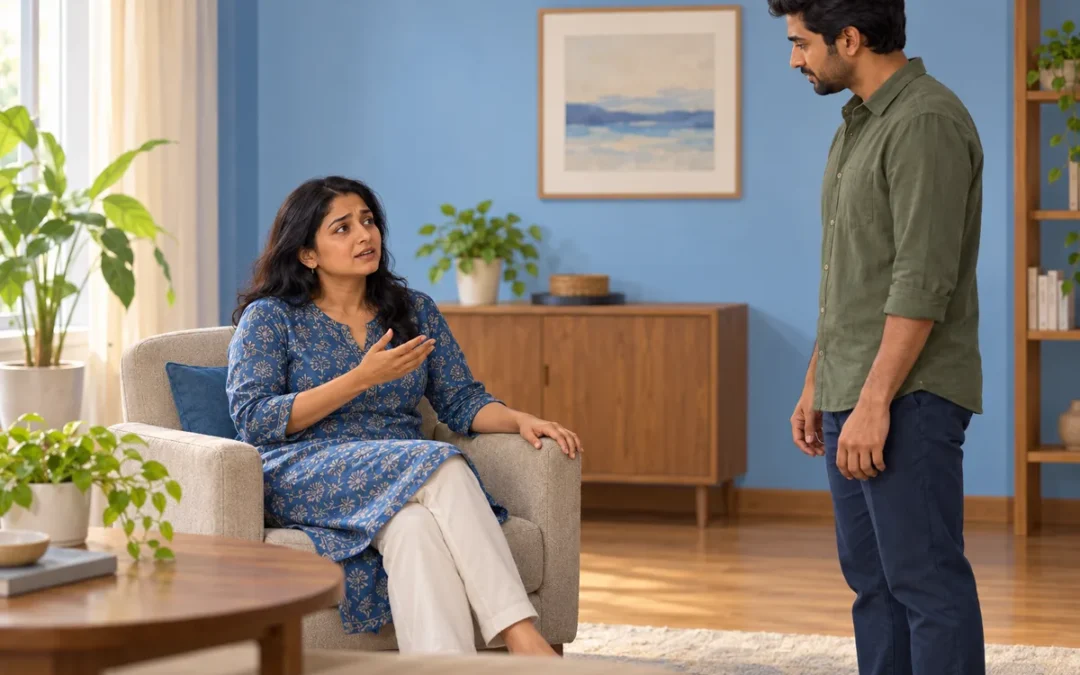
AI-generated conceptual illustration; not a photograph of Seven Days Spa premises, staff, medical support or a customer incident.
If you are dizzy after massage, pause before leaving
The NHS dizziness guidance advises lying down until the feeling passes, then getting up slowly and moving carefully. Tell the therapist or reception what you are experiencing and ask for help rather than trying to finish changing or reach a waiting vehicle in a rush.
Do not turn checkout, a ride arrival or a package timetable into a reason to push through symptoms. A booking can be discussed after the immediate situation is addressed. If the massage is still in progress, state clearly that you want it stopped.
A direct sentence is enough: “I feel dizzy. Please stop; I need help before I move or leave.” The guide to ending an ongoing session covers the communication, while a health concern needs its own response.
Recognise when the next step is urgent medical help
The NHS fainting guidance identifies emergency warning signs including not breathing, not waking promptly or not fully recovering, difficulty speaking or moving, chest pain or an irregular heartbeat, a seizure and serious injury. If those occur, get emergency assistance rather than attempting further massage.
India’s Emergency Response Support System includes medical emergencies on 112. Follow the emergency operator’s instructions. Do not drive yourself to emergency care.
Describe the symptoms and the actual location to the responder. The branch address below can help identify the visit location, but a booking number or an online form is not an emergency response service. This article is not a first-aid training course.
Do not diagnose the cause from the timing
Feeling unwell after an appointment does not establish why it happened. The NHS lists different possible reasons for dizziness and advises against self-diagnosis. Neither a relaxation label nor a theory about circulation, toxins or blood pressure can establish your individual cause.
Avoid reassurance based on a fixed recovery timer. “Rest for ten minutes and you will be fine” is not a clearance rule in this guide. Equally, do not ask for stronger massage, another heat stage or a product to test whether the symptoms disappear.
Tell a healthcare professional what happened, including the sequence and any other symptoms. They can decide which details matter. A spa booking conversation cannot replace that assessment or determine whether a medicine should be changed.
Seek advice when symptoms persist, return or worry you
The NHS advises seeing a clinician when dizziness does not go away, keeps returning or causes concern, and for associated symptoms such as vision changes, weakness or fainting. It also advises a medical check after a faint. Follow urgent-care advice when warning signs are present rather than treating a routine appointment as sufficient.
If symptoms improve, that alone does not establish their cause or make a particular onward journey appropriate. Ask for medical guidance when needed, especially if you remain uncertain about what happened. Do not book another spa session as a diagnostic test.
Replan the departure without treating transport as a cure
The NHS advises against driving or other dangerous activities while dizzy. A short familiar route does not remove that concern. Pause a planned drive or two-wheeler journey rather than rely on how close home is.
If you need support arranging the next step, ask a trusted person for help. Confirm the practical details—where someone will meet you, what assistance you need and whether the situation instead requires medical transport. Booking a car does not replace urgent assessment.
Avoid rushing into an unsafe transition just to clear the room or meet a pickup. The Arekere branch must explain any practical assistance it can provide; no escort, transport, medical observation or guaranteed waiting-area arrangement is established here.
The long-drive planning guide is for future visit planning. It does not override symptom-based decisions on the day.
Keep a short factual account once the immediate issue is addressed
When you are able to do so, note the appointment, when the feeling started, the service stages completed, whether you fainted and what help you sought. Keep observations separate from an assumed cause. Share relevant details with the clinician assessing you.
For a later branch follow-up, ask about the factual service sequence and the unresolved booking question. Avoid posting private medical details in public comments. The Arekere feedback guide explains how to make a concise private account.
If you consider another visit, first resolve any individual health advice you need. Then discuss the proposed appointment through the service overview and the branch contact below. The booking options are for ordinary enquiries after health needs have been addressed.
Branch contact and booking
These are ordinary branch booking contacts, not medical or emergency services. For a medical emergency in India, call 112.
Seven Days Spa International – Arekere / Bannerghatta Road
225–226, 2nd Floor, Bannerghatta Road, near AGN Kalyana Mantapa, Omkar Nagar, Arekere, Bengaluru, Karnataka 560076
Phone: +91 89519 38100
Email: sevendaysspainterbgroad@gmail.com
Branch services and details | Google Business Profile and directions
Branch details checked on 26 October 2026. Confirm current arrangements before travelling.
Frequently asked questions
1. Is dizziness proof that toxins have been released?
No individual cause is established by that explanation. Do not use a detox claim to dismiss symptoms.
2. Should I get up and walk it off?
The NHS advises lying down until dizziness passes, then rising slowly and moving carefully. Ask for help before moving.
3. Can I drive home if the journey is short?
Do not drive while dizzy. The length or familiarity of the route does not provide medical clearance.
4. When should someone call emergency services?
Get urgent help for serious warning signs such as breathing problems, failure to recover, chest pain, seizure or speech/movement difficulty. In India, call 112.
5. What if I actually fainted but now feel better?
The NHS advises a medical check after fainting. If emergency warning signs are present, seek urgent help.
6. Does drinking water prove that the problem is resolved?
No. Do not treat a drink or a brief rest as a diagnosis, a guaranteed remedy or clearance for travel.
7. Should I continue a steam or other package stage?
Stop and address the symptoms first. Completing a package is not a reason to continue while unwell.
8. What should I tell a healthcare professional?
Describe when symptoms began, what you felt, whether you fainted and the service sequence. Let them assess the cause.
9. Can I use the spa WhatsApp number for urgent medical advice?
No clinical or emergency-response service is established by that booking contact. Use appropriate medical or emergency help.