
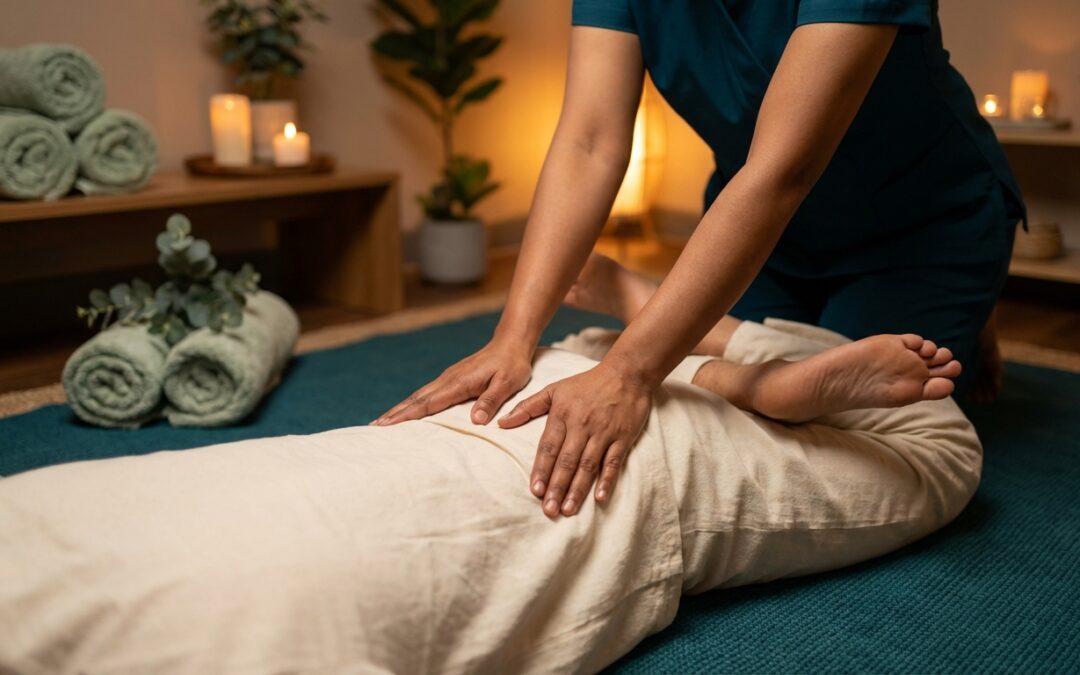
Thai massage vs Lomi Lomi JP Nagar comes down to one main preference: do you want to be moved and stretched, or do you want a more continuous flowing massage experience? At Seven Days Spa Bannerghatta Road in Arekere, both Thai Massage and Lomi-Lomi are currently listed on the branch menu. The Bannerghatta microsite describes Thai Massage as a dry therapy using compression and stretching actions similar to yoga, while Lomi-Lomi is described as fluid, rhythmic work using the therapist’s hands and forearms across different parts of the body.
For this Bannerghatta/Arekere location, the current branch microsite lists both as 60-minute sessions: Lomi-Lomi at ₹2,000 and Thai Massage at ₹2,200. Those are current published branch prices, not permanent guarantees, so confirm the final price and any live offer before booking. The branch page does not explicitly state whether its Lomi-Lomi protocol uses oil, how much oil is used, the clothing setup, exact pressure range, or how a Thai session is staged. Those practical details are therefore treated in this guide as booking questions rather than invented facts.
Choose Thai when assisted movement, compression and a dry-massage format sound appealing. Choose Lomi-Lomi when your priority is rhythmic continuity and a more flowing, passive session. Neither is automatically ‘better’ or ‘stronger.’ The more useful decision is which sensory format matches how you want to spend the hour.
Important Location Note for This Article
This article is for Seven Days Spa International on Bannerghatta Road in Arekere: 225-226, 2nd Floor, Bannerghatta Road, near AGN Kalyana Mantapa, Omkar Nagar, Arekere, Bengaluru 560076. The main Seven Days website has historically marketed this location through a ‘Spa in JP Nagar’ landing page, which is why the content calendar uses JP Nagar search wording. Seven Days also has a separate JP Nagar microsite for a different location on 100 Feet Ring Road. To avoid a booking mix-up, the phone number, price references and opening hours in this article belong to the Bannerghatta/Arekere branch unless clearly stated otherwise.
Key Takeaways
- Seven Days Spa Bannerghatta currently lists both Lomi-Lomi and Thai Massage on its branch menu.
- The Bannerghatta microsite currently lists Lomi-Lomi at 60 minutes / ₹2,000 and Thai Massage at 60 minutes / ₹2,200.
- Thai is explicitly described by the branch as a dry massage using compression and stretching actions similar to yoga.
- Lomi-Lomi is explicitly described by the branch as fluid, rhythmic work using hands and forearms across different body areas.
- The branch page does not explicitly state whether its Lomi-Lomi uses oil, so ‘oil massage’ should be treated as something to confirm rather than a guaranteed branch fact.
- Thai is usually the clearer fit when you want assisted movement and stretching; Lomi-Lomi is usually the clearer fit when you want a more continuous, flowing session.
- Pressure is not the same decision as style. A guest can prefer gentler Thai movement or firmer Lomi-Lomi pressure, subject to the spa’s actual protocol.
- Clothing and draping expectations should be confirmed before the appointment because the branch page does not publish a detailed setup.
- The Bannerghatta/Arekere branch currently publishes +91 89519 38100 and 10 AM-8 PM daily.
Thai Massage vs Lomi-Lomi: The Fastest Way to Decide
Think about what you want your body to be doing during the session. Thai Massage is the more movement-led choice. The branch describes compression and stretching actions, which means the therapist may guide the body through positions rather than keeping the experience entirely still. Lomi-Lomi is the more flow-led choice. The branch description focuses on rhythmic hand and forearm movements and on working across different areas with continuity.
This difference changes the feel of the entire appointment. A person who enjoys being stretched may find Thai engaging and satisfying. A person who wants to remain mostly passive may prefer Lomi-Lomi. A person who dislikes oil or product on the skin may initially lean toward Thai because Seven Days explicitly calls it dry. Someone who specifically wants an oil-based massage should ask how Lomi-Lomi is currently performed at the Bannerghatta branch, because the website does not explicitly state the massage medium.
At-a-Glance Comparison
| Dimension | Thai Massage | Lomi-Lomi | Likely Fit | Confirm Before Booking |
| Main feel | Compression + assisted stretching | Fluid, rhythmic hands/forearms | Movement-led vs flow-led | Exact choreography |
| Massage medium | Explicitly dry | Not stated on branch page | Thai if avoiding product | Whether Lomi-Lomi uses oil/product |
| Movement | Higher | Lower / more passive | Thai if comfortable being moved | How much assisted movement? |
| Pace | Varies with compressions and stretches | Continuous rhythmic flow | Varied movement vs continuity | Can pace/intensity be adjusted? |
| Pressure | Compression intensity can vary | Flowing-stroke pressure can vary | Choose by sensation, not ‘strongest’ | Can pressure differ by area? |
| Clothing | Exact branch clothing setup not published | Draping/product setup not published | Ask before first visit | What will I wear / what stays covered? |
| Current listing | 60 min / ₹2,200 | 60 min / ₹2,000 | Small price difference; choose by style | Final price, offer and availability |
Thai Massage: What the Experience Is Built Around
Seven Days Spa Bannerghatta describes Thai Massage as a dry massage therapy performed with compression and stretching actions similar to those used in yoga. The most important word for a first-time guest is ‘actions.’ This is not simply a therapist applying repeated strokes while you remain in one position. The format can involve assisted movement, body positioning and compression that changes how the session feels from minute to minute.
That makes Thai attractive to guests who like a more participatory body experience even though the therapist is doing the work. You do not need to be flexible to ask about Thai Massage, but you should be comfortable telling the therapist when a stretch is enough. Range of motion varies significantly between people. A stretch that feels mild to one person may feel intense to another, so the appropriate endpoint is personal comfort rather than a fixed visual position.
Because the branch calls Thai a dry massage, it is the clearer option for someone who dislikes massage oil. However, the website does not publish the exact clothing setup. Traditional Thai formats are commonly performed in loose clothing, but the Seven Days Bannerghatta protocol should be confirmed directly rather than assumed from general practice.
Lomi-Lomi: What the Experience Is Built Around
Seven Days Spa Bannerghatta describes Lomi-Lomi around fluid, rhythmic movements using the hands and forearms while different parts of the body may be massaged in the same overall flow. That description points to continuity as the defining feature. Instead of making assisted stretching the centre of the session, the experience is designed around rhythm, broad contact and transitions that feel connected.
This can appeal to guests who want to switch off mentally and remain mostly passive. The broad forearm-and-hand style can create a different sensory impression from smaller, isolated movements. Rather than asking whether Lomi-Lomi is ‘strong,’ ask whether you enjoy long, flowing contact and whether you want the session to feel continuous.
Many Lomi-Lomi formats outside this branch are oil-based, which is why people often search ‘dry massage vs oil massage’ when comparing Lomi-Lomi with Thai. But Seven Days Spa Bannerghatta’s current page does not explicitly say what massage medium it uses for Lomi-Lomi. The article should not convert a general expectation into a branch-specific promise. Ask whether oil or lotion is used, how much, whether it is fragranced, and whether a shower or toweling option is available afterward.
Movement: Assisted Stretching or Passive Flow?
Movement is the cleanest dividing line between the two services. Thai asks more from the body’s positions. Even when you are not actively stretching yourself, the therapist may guide a limb or the torso into a different position, use compression through a muscle group, and then move to another stretch or area. This can make the session feel varied and dynamic.
Lomi-Lomi is usually chosen for the opposite reason: the guest wants to remain passive while the therapist creates continuity. Seven Days’ own description emphasizes fluid rhythm rather than assisted range. That can feel easier for someone who does not want frequent repositioning or who simply finds long-flowing massage more relaxing.
Neither preference is more advanced. Some experienced spa guests dislike assisted stretching; some first-time guests enjoy it immediately. The right choice depends on whether being moved helps you relax or makes it harder to relax.
Dry Massage vs Oil Massage: What Is Actually Verified?
Thai is straightforward on the current Seven Days Bannerghatta menu: it is described as a dry massage. Lomi-Lomi is less specific. The branch describes the movement but does not state whether oil, lotion or another massage medium is used. That distinction matters because product changes clothing, draping, showering, skin feel, fragrance exposure and what you may want to wear afterward.
If the reason you are comparing the two is specifically ‘dry massage vs oil massage,’ call before booking and ask one direct question: ‘Is your current Lomi-Lomi at Bannerghatta performed with oil, and if yes, what product do you use?’ That answer is more useful than relying on a generic Lomi-Lomi description from another spa or another Seven Days branch.
If fragrance sensitivity or skin irritation matters, ask for the product name or ingredient information before application. Do not assume ‘natural,’ ‘herbal’ or ‘premium’ automatically means it will suit every skin type.
Clothing and Draping: What Should You Expect?
Clothing expectations can be one of the biggest first-visit differences. A dry Thai session commonly lends itself to loose clothing that allows movement, but Seven Days Bannerghatta does not publish its exact garment or changing protocol. Ask whether the spa provides clothing, whether you remain fully clothed, and how privacy is handled during position changes.
For Lomi-Lomi, the answer depends partly on whether the branch uses oil or another massage medium. If product is applied to the body, draping and changing will naturally be different from a fully clothed dry session. The branch should explain what remains covered, when the therapist leaves the room for changing, which areas are included, and whether any area can be skipped.
A good booking conversation should make the setup predictable before the treatment begins. Privacy should not depend on the guest figuring out the routine after entering the room.
Pace: Structured Movement vs Continuous Rhythm
Thai can feel segmented because the therapist may move through compressions, positions and stretches. That does not necessarily mean it is fast. A careful Thai session can be slow and deliberate; the defining feature is that the sensation changes as the body is moved.
Lomi-Lomi’s published description suggests a more continuous rhythm. The therapist’s hands and forearms can create longer connected movements across body areas, which can reduce the sense of separate technique blocks. Guests who dislike frequent stops and restarts may prefer this continuity.
If pace matters strongly to you, describe your preference rather than asking for a label. ‘I want a slow, calm session’ or ‘I am comfortable with more movement’ gives the therapist more useful information than assuming every Thai or every Lomi-Lomi session feels identical.
Pressure: Which One Is Stronger?
Neither service should be marketed as automatically stronger. Thai can feel intense because a compression or stretch changes the position of the body, but intensity is not identical to deep pressure. Lomi-Lomi can also feel substantial if the therapist uses broad forearm pressure. The sensations are simply different.
Pressure should be discussed by area. You might like medium pressure through the back, lighter pressure around the calves, and very gentle assisted movement through the hips. Another guest may prefer stronger shoulder work but minimal stretching. A comparison guide is most useful when it separates these choices instead of forcing the guest into ‘light massage’ or ‘strong massage’ categories.
Sharp pain, numbness, burning or a feeling that you need to brace against the therapist is not a useful quality target. Ask for an adjustment when the session stops feeling comfortable.
Thai vs Lomi-Lomi for First-Time Spa Guests
For a first-time guest, predictability matters. Thai may be easy to choose if the idea of a dry, movement-led session sounds appealing and you are comfortable being repositioned. Lomi-Lomi may be easier if you want to lie down, remain passive and experience rhythmic massage without making stretching the main event.
The first-time decision can also come down to practical details. Do you need to return to work immediately? Do you care whether oil reaches your skin or hair? Do you prefer more clothing during massage? Do you dislike being stretched? Do you want to stay in one general position for longer? The answers point naturally toward one format.
If you are still unsure, book only after the branch explains the exact current protocol. A good comparison article should reduce uncertainty, not pressure the guest into one service.
Who May Prefer Thai Massage?
- Guests who specifically want a dry massage format.
- People who enjoy assisted stretching, compression and position changes.
- Guests who prefer movement to long oil-based or flowing strokes.
- People comfortable giving feedback about stretch intensity and range.
- Guests who do not want massage product on the skin, subject to the branch’s exact setup.
- People who like a more structured, varied sensory experience.
These are preference profiles, not medical indications. Thai Massage should not be chosen because marketing promises to correct posture, cure stiffness, treat an injury or permanently increase flexibility.
Who May Prefer Lomi-Lomi?
- Guests who prefer continuous rhythm over assisted stretching.
- People who want to remain mostly passive during the session.
- Guests who enjoy broad hand-and-forearm contact.
- People who find flowing massage easier to mentally switch off with.
- Guests who do not mind massage product if the branch confirms it is part of the current protocol.
- People who want a relaxation-led experience rather than a movement-led one.
Again, these are preference profiles. Do not present Lomi-Lomi as a treatment for circulation, detoxification, emotional release, trauma, chronic pain or other medical conditions unless an appropriate evidence base and professional scope support the claim.
Which One May Feel Better After a Long Desk Day?
Desk work does not create one universal massage need. Some people finish the day wanting to move after sitting for hours, which may make Thai’s assisted stretching appealing. Others feel overstimulated and want to do as little as possible, which may make Lomi-Lomi’s flowing rhythm more attractive.
The decision should remain preference-led rather than diagnostic. A spa session can be part of a wellness routine, but it should not be marketed as correcting spinal alignment, reversing posture changes or treating a medical neck/back condition.
What About Gym or Workout Days?
If you have exercised normally and simply want a relaxing spa session, either format may be a personal choice. Thai may appeal if you enjoy movement; Lomi-Lomi may appeal if you want a quieter passive session. But a fresh injury, marked swelling, severe pain, instability, new numbness or weakness should not be treated by simply requesting a stronger massage.
NCCIH notes that massage is generally low risk when performed appropriately, but serious adverse effects have rarely been reported and can be more relevant with vigorous techniques or people at increased risk of injury. Massage should not be used to postpone appropriate medical evaluation of a concerning problem.
Thai Massage vs Lomi-Lomi at Seven Days Spa Bannerghatta: Current Booking Facts
| Service | Current Duration | Current Published Price | Branch Description | Confirm Before Booking |
| Lomi-Lomi | 60 min | ₹2,000 | Fluid, rhythmic hands and forearms | Oil/product, clothing/draping, pressure, final price/offer |
| Thai Massage | 60 min | ₹2,200 | Dry compression + stretching similar to yoga | Clothing, stretch range, pressure, final price/offer |
These details are taken from the current Seven Days Spa Bannerghatta microsite. The main sevendaysspa.in ‘Spa in JP Nagar’ landing page has a different service presentation and currently shows Thai as 60/90 minutes at ₹2,200/₹2,700 while not presenting Lomi-Lomi in the same pricing block. For publication, use one canonical branch source and verify live prices with the Bannerghatta team so users are not shown conflicting menu information.
What Happens During a Typical Booking Journey?
Seven Days Spa does not publish a minute-by-minute choreography for either treatment, so the sequence below is a practical planning framework rather than a claim about the exact branch routine.
1. Choose the Sensory Format
Decide whether your stronger preference is movement/stretching or flowing rhythm. If you do not know, tell the booking team exactly that.
2. Confirm the Current Service
Ask whether Thai and Lomi-Lomi are both available for your preferred date and time and confirm the live duration and price.
3. Ask About Clothing and Massage Medium
For Thai, confirm the clothing provided or recommended. For Lomi-Lomi, ask whether the current protocol uses oil/lotion and whether the product is fragranced.
4. Explain Pressure and Movement Preferences
Say what pressure you prefer and whether assisted stretching should be gentle, moderate or minimized.
5. Clarify Areas to Avoid
Mention areas you do not want massaged or moved. Disclose relevant injuries, recent procedures, skin issues or health concerns.
6. Review Privacy and Draping
Ask how changing, draping and position changes work so the setup is predictable.
7. Give Feedback During the Session
Tell the therapist if pressure, stretch, temperature, product or positioning is uncomfortable rather than waiting until the end.
15 Questions to Ask Before Booking
- Are Thai Massage and Lomi-Lomi both currently available at the Bannerghatta/Arekere branch?
- Is each session still 60 minutes?
- What is the current final price for each service and is any offer active?
- Is Thai Massage performed fully dry at this branch?
- What clothing does the spa provide or recommend for Thai Massage?
- How much assisted stretching and repositioning should I expect in Thai?
- Can Thai stretching be made gentler or minimized?
- Does the current Lomi-Lomi protocol use oil, lotion or another massage medium?
- What product is used for Lomi-Lomi, and is it fragranced?
- How does draping work for Lomi-Lomi?
- Can pressure be adjusted separately by body area in either massage?
- Can I ask to skip a body area or movement?
- Is the full booked time hands-on massage, or does it include changing/consultation time?
- Are shower or toweling facilities available if Lomi-Lomi uses oil?
- Which branch am I booking: Bannerghatta/Arekere or the separate JP Nagar location?
Seven Days Spa Bannerghatta: Current Booking Details
Branch: Seven Days Spa International – Bannerghatta Road / Arekere
Address: 225-226, 2nd Floor, Bannerghatta Road, near AGN Kalyana Mantapa, Omkar Nagar, Arekere, Bengaluru, Karnataka 560076
Phone: +91 89519 38100
Email: sevendaysspainternational@gmail.com
Current published hours: Monday-Sunday, 10 AM-8 PM
Seven Days Spa Bannerghatta microsite
Seven Days Spa main JP Nagar/Bannerghatta landing page
Frequently Asked Questions
1. What is the main difference between Thai Massage and Lomi-Lomi?
Thai is movement-led: Seven Days Bannerghatta describes it as a dry therapy using compression and stretching actions. Lomi-Lomi is flow-led: the branch describes fluid, rhythmic use of hands and forearms.
2. Which is better for someone who dislikes stretching?
Lomi-Lomi is usually the more natural comparison choice because assisted stretching is central to the Thai description. Confirm the exact Lomi-Lomi setup before booking.
3. Which is better if I do not want oil?
Thai is the clearer choice because Seven Days Bannerghatta explicitly describes it as dry. The branch page does not state whether its Lomi-Lomi uses oil, so ask before booking.
4. Is Lomi-Lomi definitely an oil massage at Seven Days Bannerghatta?
The current Bannerghatta page does not explicitly say. Many Lomi-Lomi formats use massage oil, but the branch-specific medium should be confirmed rather than assumed.
5. Is Thai Massage performed with clothes on?
Dry Thai massage commonly uses loose clothing, but the Seven Days Bannerghatta website does not publish its exact clothing protocol. Ask what the branch provides.
6. Which massage involves more movement?
Thai. The branch specifically describes compression and stretching actions, while Lomi-Lomi is described around fluid rhythm.
7. Which massage feels more relaxing?
That depends on preference. Some guests relax through stretching and movement; others relax more easily when they remain passive during flowing massage.
8. Which massage is stronger?
Neither is automatically stronger. Thai intensity may come from compression and stretch; Lomi-Lomi intensity can come from pressure within broad flowing strokes. Ask for your preferred intensity.
9. How long are the sessions at Seven Days Spa Bannerghatta?
The current Bannerghatta microsite lists both Lomi-Lomi and Thai Massage at 60 minutes.
10. What is the current price?
The current Bannerghatta microsite lists Lomi-Lomi at ₹2,000 and Thai Massage at ₹2,200 for 60 minutes. Confirm the final live price and any offer before booking.
11. Can Thai Massage stretching be reduced?
A guest should discuss movement tolerance before the session and ask for adjustments when a stretch feels too strong. Confirm how the branch customizes the current protocol.
12. Can pressure be changed during Lomi-Lomi?
Pressure should be discussed and adjusted to comfort. Ask the branch how its Lomi-Lomi protocol handles lighter or firmer preferences.
13. Is Thai Massage good for first-time guests?
It can be if you are comfortable with a dry, movement-led session. First-timers should ask about clothing, positions and stretch intensity beforehand.
14. Is Lomi-Lomi good for first-time guests?
It may suit first-timers who prefer a passive, flowing experience. Confirm the massage medium, draping and pressure so the setup feels predictable.
15. Which one should I choose after a normal workout?
If you are simply choosing for relaxation after ordinary exercise, use your movement-versus-flow preference. Fresh injury, significant swelling, severe pain, numbness or weakness should be assessed appropriately rather than treated with stronger massage.
16. Is Seven Days Spa Bannerghatta the same as the separate JP Nagar branch?
No. This article’s booking details are for the Bannerghatta/Arekere branch at 225-226 Bannerghatta Road. Seven Days also operates a separate JP Nagar microsite on 100 Feet Ring Road.
17. How do I book Thai or Lomi-Lomi at the Bannerghatta branch?
Call +91 89519 38100 and confirm the service, duration, live price, clothing/product setup and your pressure or stretching preferences before travelling.
-By Priya Nair, Manager